Gasping for Breath: Delhi’s Air Quality Crisis vs. The World (2025 Edition)
Date: December 16, 2025
[Delhi Smog 2025]
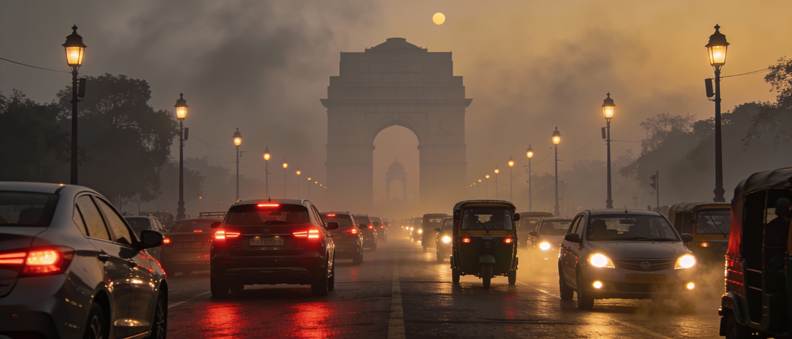
Cinematic shot of Delhi traffic in heavy winter smog, late 2025
The winter of 2025 has brought a familiar, choking grey blanket over India’s capital. As residents wake up to yet another morning of “Severe” air quality alerts, the question isn’t just how bad it is, but how far behind we are compared to the rest of the world.
While cities across the globe are breathing easier, Delhi—along with a handful of South Asian neighbors—remains locked in a struggle for basic clean air. This blog dives into the data, compares Delhi with global counterparts, and explores why the capital is still gasping for breath.
The Reality Check: December 2025
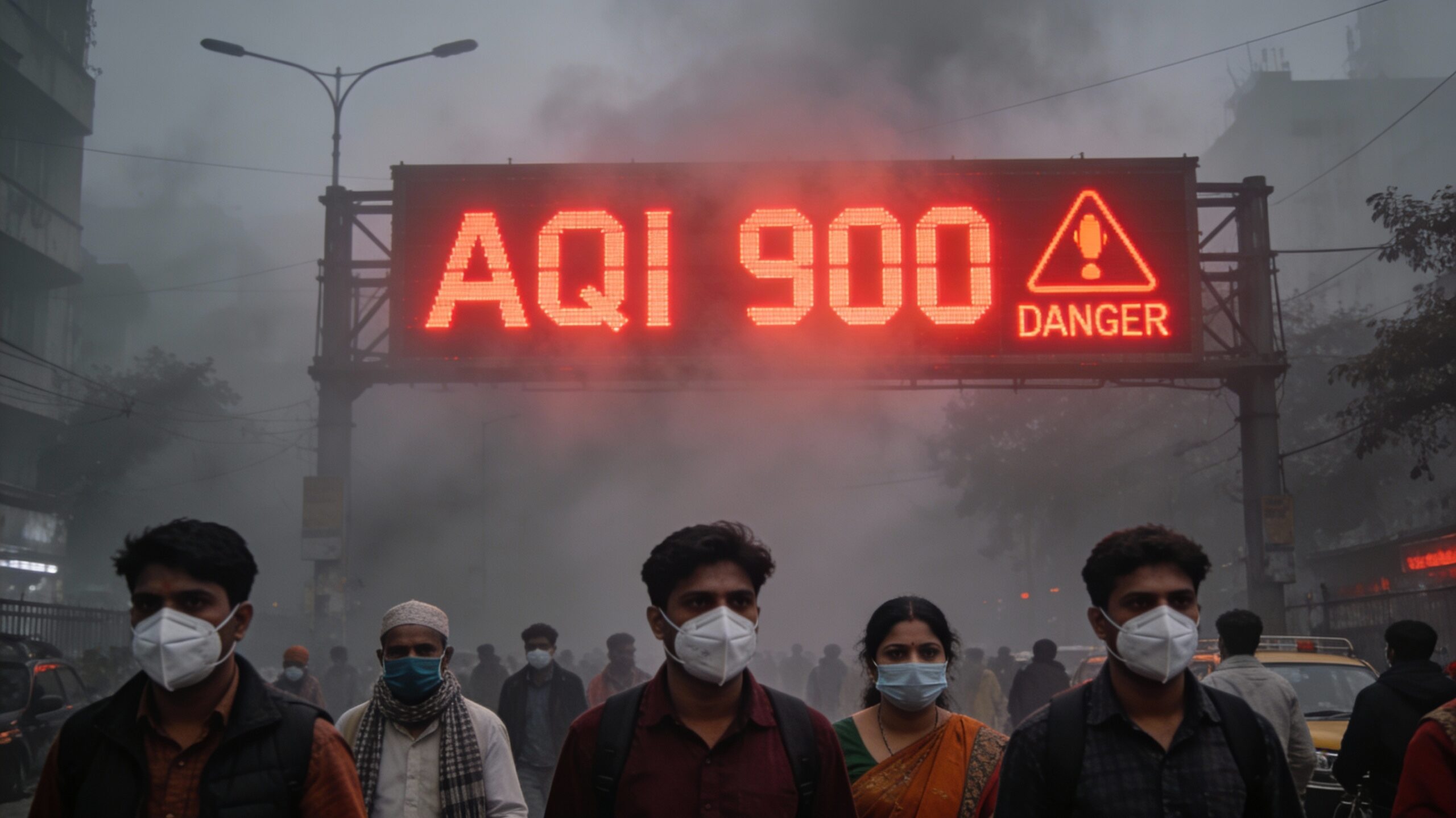
As of mid-December 2025, Delhi’s air quality has hit alarming peaks. On December 13, the Air Quality Index (AQI) surged to 461, pushing deep into the “Severe” category. In some hotspots like Wazirpur and Rohini, monitoring stations maxed out, hitting the 500 mark.
To put this in perspective: The World Health Organization (WHO) considers a PM2.5 level of 15 µg/m³ as safe for a 24-hour period. In Delhi, we are currently breathing air that is often 20 to 30 times more toxic than that safety limit.
Global Comparison: Where Do We Stand?
It is often said that pollution is a global problem, but the data tells a story of a divided world. While Delhi battles hazardous smog, cities in Europe, Oceania, and the Americas are recording some of their cleanest winters on record.
The chart below illustrates the stark contrast in air quality recorded this month across major global cities.
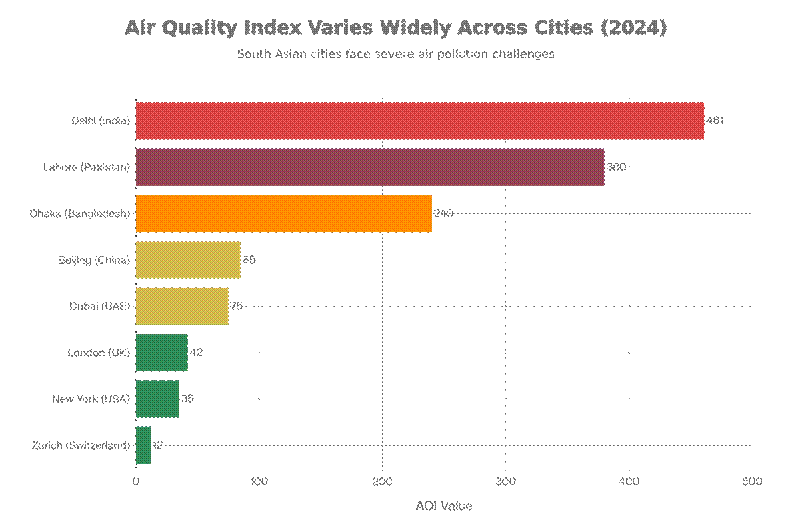
Comparison of Air Quality Index (AQI) across major global cities in December 2025. Delhi and Lahore show ‘Severe’ levels, while cities like Zurich and New York maintain ‘Good’ air quality.
- The “Severe” Club: Delhi (461) and Lahore (380) are in a league of their own, frequently trading places for the title of “World’s Most Polluted City.”
- The Beijing Pivot: Once Delhi’s “pollution twin,” Beijing has successfully brought its average winter AQI down to the Moderate (80-100) range. Their aggressive regional crackdown on heavy industry and vehicle emissions over the last decade proves that change is possible.
- The Gold Standard: Cities like Zurich (12) and New York (35) demonstrate what effective urban planning looks like. Their AQI levels are consistently in the “Good” green zone, thanks to stringent vehicle emission norms and wind-friendly geography.
Why Is Delhi Choking? (The 2025 Shift)
The narrative of Delhi’s pollution is evolving. While crop residue burning (stubble burning) dominates the headlines in October and November, by December, the primary villain changes.
- Vehicular Emissions: In December 2025, with farm fires subsiding, local vehicular pollution has emerged as the top contributor. Delhi’s massive fleet of private vehicles releases a constant stream of PM2.5 and Nitrogen Dioxide (NO2).
- Note: This highlights the critical urgency for the rapid adoption of Electric Vehicles (EVs). Every internal combustion engine replaced by an EV is a direct reduction in street-level emissions.
- The Winter “Lock”: Low temperatures (dipping to 8°C) and calm winds create a “lid” over the city. This phenomenon, known as temperature inversion, traps pollutants close to the ground, preventing them from dispersing.
- Secondary Aerosols: Gases from vehicles and industries chemically react in the atmosphere to form secondary particles, thickening the smog even when local emissions dip slightly.
The comparison with Beijing is particularly telling. Ten years ago, Beijing’s “Airpocalypse” was infamous. Today, they have reduced particulate pollution by over 40%. Their strategy was regional—they didn’t just ban cars in the city; they cleaned up the steel plants and coal factories in the surrounding provinces.
For Delhi, the lesson is clear: Emergency bans (like GRAP Stage IV) are band-aids for a bullet wound. The cure lies in:
- Massive EV Transition: accelerating the shift to electric mobility for public and private transport.
- Regional Coordination: Treating the entire NCR airshed as one zone for strict enforcement.
- Dust Management: Mechanized cleaning of roads to stop dust resuspension.
Living in Delhi this winter is equivalent to smoking 40-50 cigarettes a day. While we wait for long-term policy shifts, personal protection—using N95 masks and HEPA air purifiers—is unfortunately necessary.
We have the technology and the global examples to fix this. We just need the will to clear the air.